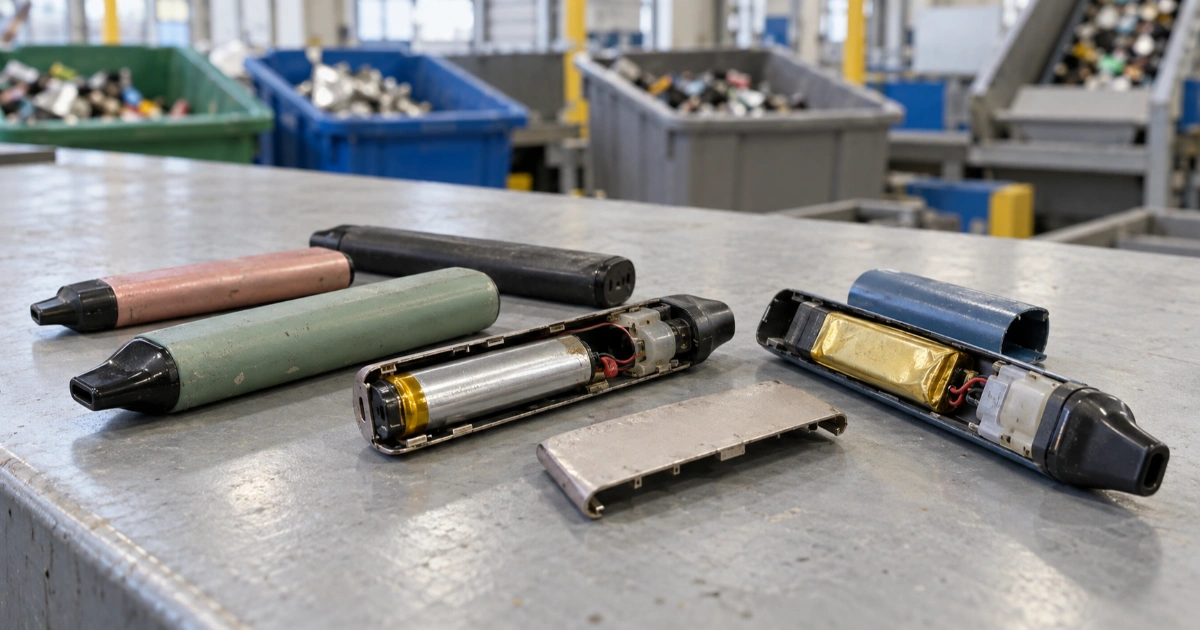
California has approved a phased ban on tobacco-containing disposable vapes, with restrictions on manufacturing and importing due to begin in 2027 and retail sales prohibited from 2028. The law is intended to address waste and environmental concerns associated with single-use devices that contain batteries.
Restrictions begin in 2027
Gov. Gavin Newsom signed the legislation on Monday. From Jan. 1, 2027, manufacturers and importers will be prohibited from producing or bringing new or refurbished battery-embedded vapor devices into California. Retail sales will be prohibited from Jan. 1, 2028.
The law covers disposable e-cigarettes containing tobacco. It does not apply to cannabis vaping products.
Vapes, or electronic cigarettes, use batteries to heat a liquid or other substance and produce an aerosol. Depending on the product, the aerosol may contain nicotine or cannabis, along with flavorings and other chemicals. Some devices can be refilled; disposable models are designed to be discarded after use.
Environmental concerns and business opposition
Supporters have pointed to the waste generated by disposable vapes. The California Public Interest Research Group, or CalPIRG, estimates that nearly 500,000 disposable vapes are thrown away across the United States every day.
Discarded devices may end up in landfills or public spaces. Their batteries can pose fire risks in landfills, while chemicals including lead and lithium may leak into the environment, according to the article. Assemblymember Jacqui Irwin, who authored the legislation, said it is intended to prevent battery acid from discarded single-use vapes from entering land and waterways.
Experts cited in the article say affordability and accessibility have helped make disposable vapes popular. Compared with refillable devices, they generally do not require users to buy additional e-liquid or maintain the device.
State or local authorities will be able to impose fines for violations. A first offense can result in a $500 fine, a second in a $1,000 fine, and subsequent violations in a $2,000 fine.
The legislation has faced opposition from California businesses and tobacco retailers. The California Grocers Association opposed a similar proposal in 2022, arguing that restrictions could contribute to increased tobacco smuggling.
Arkan Somo, co-founder of the Neighborhood Market Association, which represents small businesses in California, said the restrictions could put additional pressure on family-owned stores that sell tobacco products. Somo also argued that the measure could put California at a disadvantage.
Source Acknowledgement
Adapted for Smoke Free News from a report by Shubhangi Chowdhury published by The American Bazaar. The views and claims in the source report are not an endorsement by Smoke Free News.
Source: The American Bazaar
- Author
- Shubhangi Chowdhury
- Published
- 01 Oct 2026
- Last verified
- 01 Oct 2026