Australia’s Therapeutic Goods Administration (TGA) has decided to classify 6-methylnicotine as a prohibited substance under the Poisons Standard from 1 October 2026. The regulator says its toxicity, potential to cause dependence and presence in products marketed as “nicotine-free” justify tighter controls.
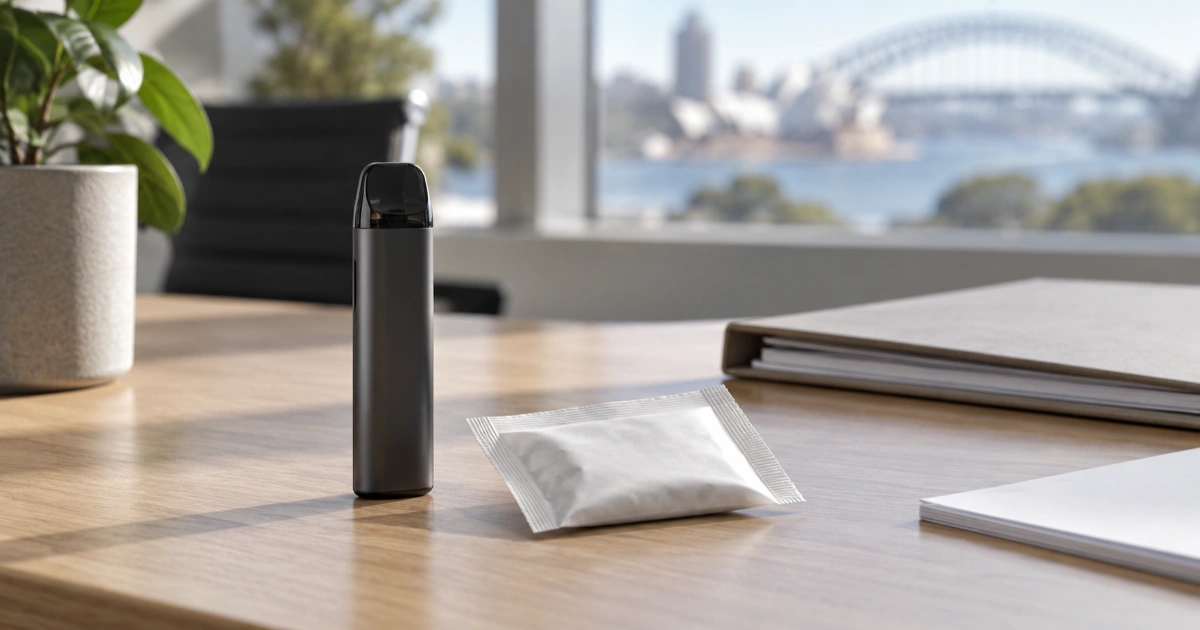
The final decision places 6-methylnicotine in Schedule 9, a stricter classification than the Department of Health, Disability and Ageing’s original proposal to list it as a Schedule 7 dangerous poison. The TGA said the substance has been reported in Australian e-cigarette liquids and oral pouches, including products promoted as nicotine alternatives.
Why the TGA chose tighter controls
After considering advice from the Advisory Committee on Medicines Scheduling, the TGA delegate concluded that Schedule 7 restrictions would not provide sufficient protection. The regulator cited acute toxicity, dependence potential, misleading marketing and the use of 6-methylnicotine in unapproved consumer products. It also highlighted possible effects on vulnerable populations.
The TGA received 163 public submissions before the committee meeting, nine of which included written components. One further submission after the interim decision supported the stronger classification.
The delegate said there were no identified therapeutic benefits and that the risks outweighed claims that the substance was safe. The TGA also said Schedule 9 would provide a stronger legal framework for enforcement, including higher penalties for unlawful supply and possession under Commonwealth and state and territory drug laws.
The new Poisons Standard takes effect on 1 October 2026. The TGA said no lawful products in Australia would be affected by the decision.
Other changes in the new Poisons Standard
The September decision also adds explicit Schedule 4 entries for the long-acting human growth hormone analogues somatrogon and lonapegsomatropin, aligning their scheduling with somapacitan. Somatrogon and lonapegsomatropin are primarily used to treat growth failure in children with inadequate growth hormone production; somapacitan is also used as replacement therapy in adults with growth hormone deficiency.
All three medicines will be added to clause 5 of Appendix D, placing additional controls on their possession or supply. The TGA cited the need for medical supervision, correct dosing, the risk of adverse events from overdose and the potential for misuse. No public submissions were received on the interim decisions for these three medicines.
The new standard will also add eight chemical entities. Bempedoic acid, efanesoctocog alfa, eplontersen, gadoquatrane, gepotidacin, olutasidenib and tapinarof will receive Schedule 4 entries as prescription-only medicines. The notice does not give further details about their approved indications, prescribing requirements or availability in Australia.
Teplizumab will also be listed in Schedule 4, with additional warnings under Appendix L. The warning says it should not be used during pregnancy or for at least 30 days before a planned pregnancy. It also says patients should not breastfeed during treatment or for at least 30 days after the final dose. These new chemical entity scheduling changes take effect on 1 October 2026.
TGA takes separate action over peptide advertising
In a separate matter, the TGA has begun Federal Court proceedings over alleged unlawful advertising of prescription-only peptides by A.C.N. 641 483 703 Pty Ltd, formerly BioV8 Pty Ltd, and its former directors Edward McGill and Nicholas Austin.
The regulator alleges the company advertised peptides including BPC-157, CJC-1295 and GHRP-6 on its website and social media between June 2024 and July 2025. The TGA says the advertisements promoted the peptides for serious conditions, including cancer, HIV/AIDS and mental illnesses, and included restricted or prohibited representations without the required approval or permission. It also alleges the two former directors aided, abetted, counselled or procured the advertising.
The TGA says it will seek declarations and pecuniary penalties. Proceedings against the company, which is in liquidation, depend on the Federal Court granting leave. The allegations have not been established in court.
TGA head Professor Anthony Lawler said the regulator would take legal action against entities involved in unlawful activity in the peptide industry, including health practitioners, compounding pharmacies, social media influencers and telehealth clinics where unlawful advertising is identified.
The TGA has added unapproved peptide products to its priority focus areas after increased detection of alleged unlawful importation, supply and advertising. It says many peptide products imported into and supplied in Australia are not listed on the Australian Register of Therapeutic Goods and have not been assessed by the regulator for safety, quality or effectiveness.
Source Acknowledgement
Adapted independently from reporting by Amanda Sheppeard for Medical Republic. The Federal Court claims described in the report are allegations, not findings of liability.
Source: Medical Republic
- Author
- Amanda Sheppeard
- Published
- 29 Sep 2026
- Last verified
- 29 Sep 2026